


Some of the many Bearings.
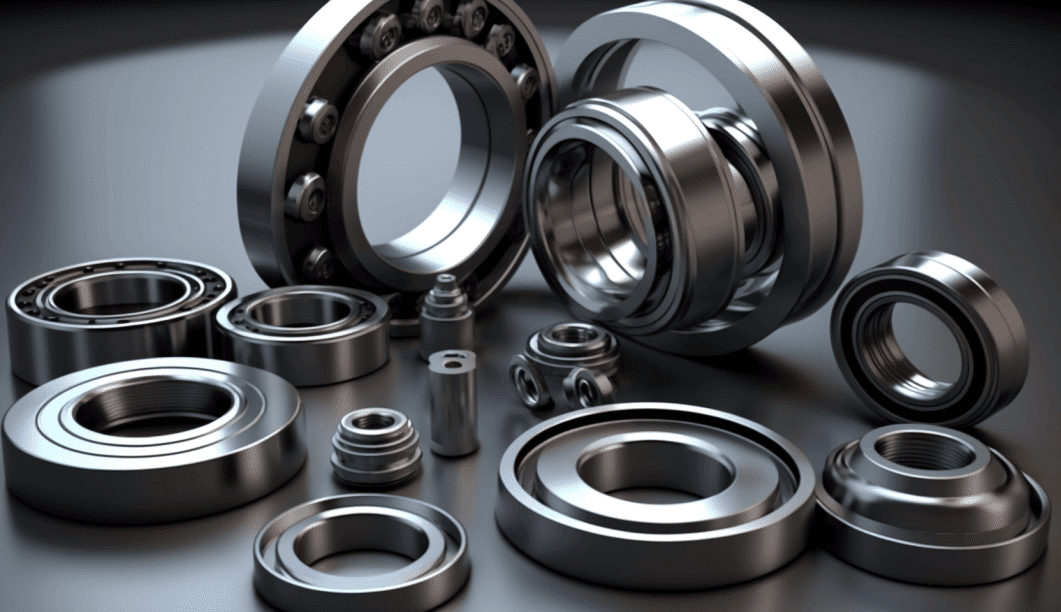
Bearings
Bearings are mechanical components designed to reduce friction, support loads, and enable smooth rotational or linear motion between moving parts. Different bearing types are engineered to handle specific load capacities, speeds, and operating conditions.
Ball Bearings
Ball bearings use spherical rolling elements to support radial and light axial loads. They are known for low friction, high-speed capability, and versatility, making them suitable for motors, pumps, conveyors, and general machinery.
Roller Bearings
Roller bearings use cylindrical, tapered, or spherical rollers to support heavier loads than ball bearings. They are commonly used in industrial equipment where high radial or combined loads are present.
Tapered Roller Bearings
Designed to handle both radial and axial loads, tapered roller bearings are ideal for applications requiring high load capacity and precise alignment, such as gearboxes, wheel hubs, and heavy machinery.
Spherical Roller Bearings
These bearings accommodate misalignment and shaft deflection while supporting heavy radial and axial loads. They are well-suited for mining, construction, and industrial processing equipment.
Needle Bearings
Needle bearings use long, thin rollers to provide high load capacity in a compact design. They are commonly used in automotive components, compressors, and space-constrained machinery.
Thrust Bearings
Thrust bearings are designed specifically to support axial (thrust) loads. They are used in applications such as vertical shafts, turntables, and screw conveyors.
Plain Bearings (Bushings)
Plain bearings consist of a sliding surface rather than rolling elements. They are simple, durable, and cost-effective, often used in low-speed or high-load applications.